


The Great Trouser Debate: Flat Front vs. Pleats – Which Is Right for You?
- 0 Comments |
- 0
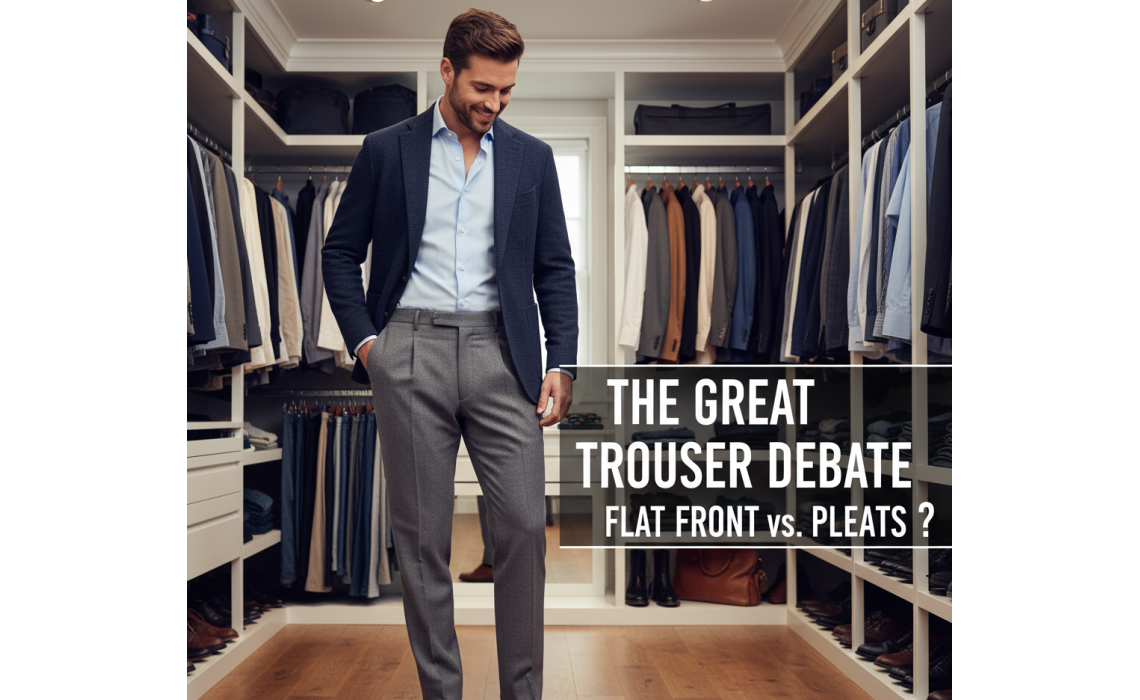
If you’ve shopped for a pair of trousers lately, you’ve no doubt faced the fundamental question: flat front or pleats? For most of the past twenty years, this was hardly a question at all. Flat-front trousers were the undisputed modern standard, while their pleated counterparts were often dismissed as outdated—a relic of your grandfather's wardrobe or 1980s power suits. But fashion is cyclical, and in 2026, the pleat is making a comeback with a vengeance.
This revival has reopened the debate, leaving many men standing in front of the mirror, pondering which style suits them best. Is one "better" than the other? The short answer is no. The longer answer is that they serve different purposes, flatter different body types, and convey different stylistic messages.
Let's examine each option so you can decide which team you’re on.
The Contenders: What’s the Difference?
Before choosing a winner, let's clarify the terms.
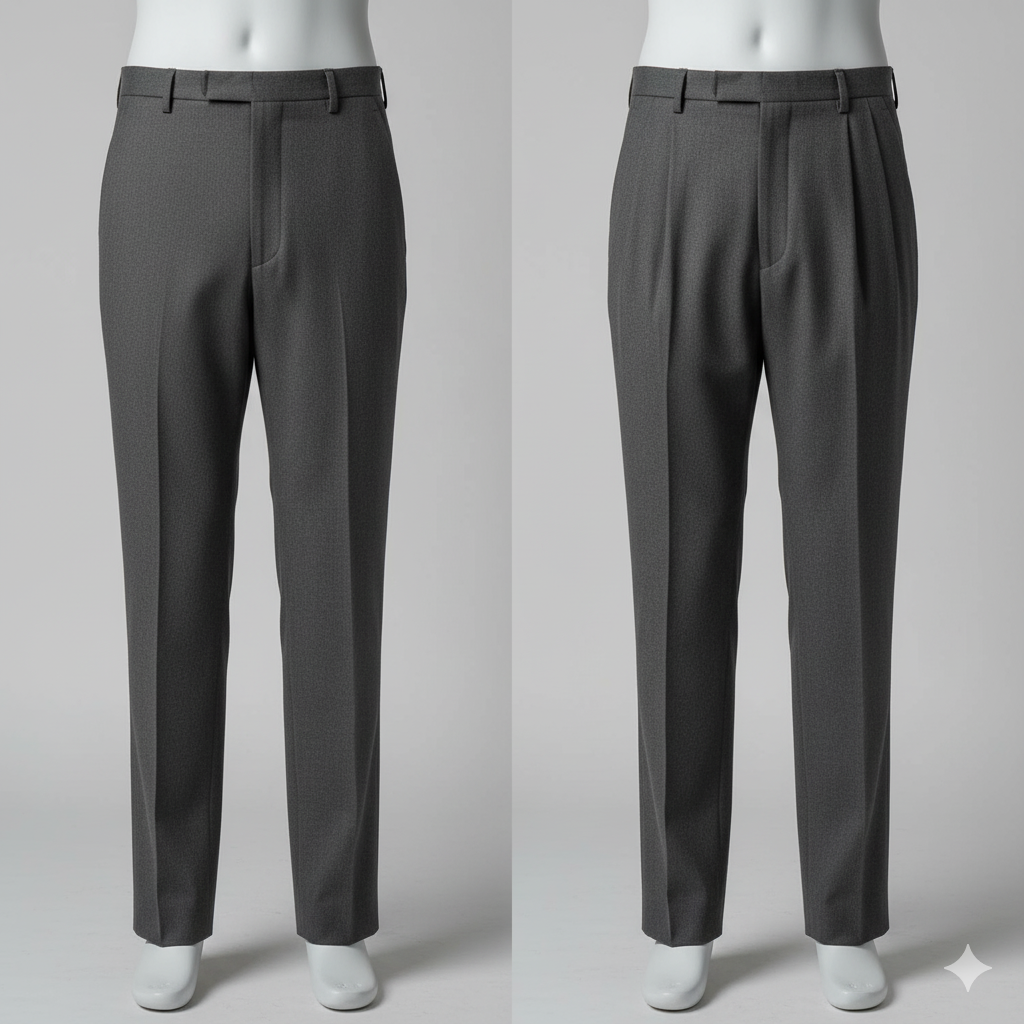
Flat-Front Trousers (left photo): As the name suggests, these trousers have a smooth, flat front. The fabric lies flat from the waistband down over the fly, creating a clean, slim, and uninterrupted silhouette.
Pleated Trousers (right photo): These feature small, sewn-in fabric folds just below the waistband, on either side of the fly. These pleats (single or double) are designed to provide extra fabric, allowing more room around the hips, seat, and thighs.
Case #1: The Flat Front – The Modern Mainstay
For years, flat-front trousers have been the default choice for the modern man —and rightly so.
The Pros:
- Sleek & Slimming: The clean lines create a long, lean vertical silhouette. This lack of visual clutter at the waist is slimming and offers a sharp, contemporary look.
- Versatility: An all-rounder. Flat-front chinos are perfect for casual wear, while flat-front wool trousers serve as the standard for most modern business suits and formal occasions. They transition effortlessly from office to dinner.
- Easy to Style: Their simplicity makes them a blank canvas. They complement virtually anything—T-shirts, polos, casual button-downs, chunky sweaters, and sharply tailored blazers.
The Cons:
- Less Forgiving: Slim cut trousers can be restrictive for men with larger or more athletic builds (i.e., bigger thighs, glutes, or hips).
- The "Pocket Problem": If the fit isn't perfect, the side pockets can pull open and flare out. This is especially true if you carry bulky items; a large phone or wallet will create an obvious and disruptive bulge, spoiling that clean line.
Who Should Wear Them? Flat-front trousers are ideal for men with slim to average figures. They flatter your frame by not adding bulk to your midsection, provided your pockets aren’t overloaded.
Case #2: The Pleat – The Comeback King
Once seen as old-fashioned, the fashion world has revitalised pleats and are now a mark of style-savvy men. Today's pleats are not the billowy, oversized "dad pants" of the 90s; they are tailored, purposeful, and part of a more relaxed, confident silhouette.
The Pros:
- Superior Comfort & Mobility: This is the main benefit of pleats. The extra fabric expands when you move or sit, offering significantly more room in the hips and thighs. For those who find slim-fit pants restrictive, pleats are a revelation.
- Practical Pocket Solution: That additional fabric isn't just for comfort. It's pivotal for those carrying bulky items like wallets, keys, or large smartphones. The fabric folds expand to hide these items, maintaining the trousers’ silhouette and avoiding unsightly pocket bulges.
- A Tailor's Secret: The high-waist look: From a tailoring perspective, pleats work beautifully with high-waisted trousers. A high rise elongates your legs, while the pleats help manage the fabric's transition from a nipped-in waist to the wider hip area, creating a flattering, comfortable drape.
- Flattering for Various Body Types: Pleats are especially advantageous for men with athletic or larger builds. They provide the necessary space in the seat and thighs without needing to size up the entire pant.
The Cons:
- The "Baggy" Risk: The extra fabric that makes pleats comfortable can also lead to a baggy or sloppy appearance. The key is a modern, tapered cut that is roomy at the top but slimmer at the ankle.
How to Wear Pleats in 2026: The key is balance. To avoid a bottom-heavy look, always tuck in your shirt. This highlights the high waist and pleats, which is the entire point.
For a Casual Look: Opt for single-pleat, high-rise trousers (in linen, cotton, or corduroy) paired with a fitted T-shirt or knit polo, tucked in to define your waist.
For a Smart Look: Combine tapered pleated trousers with a crisp shirt and blazer. The pleats add a timeless, sartorial touch to a modern, sharp suit.
The Verdict: So, Which Do You Choose?
The "flat front vs. pleats" debate isn't about which is better, but which suits your needs and the occasion.
Choose FLAT-FRONT trousers if:
- You have a slim or average build.
- You want a clean, minimalist, yet modern look.
- You don't carry much in your front pockets.
- You favour a lower or mid-rise pair of trousers.
Choose PLEATED trousers if:
- You have an athletic or larger build and require more room.
- Comfort and freedom of movement are priorities.
- You often carry bulky items like a phone or wallet.
- You’re style-conscious and wish to explore a high-waisted or more traditional, sartorial appearance.
Ultimately, the best-dressed man owns both in his wardrobe. Use flat-fronts for sleek, simple outfits, and opt for well-cut pleated trousers when you need extra comfort, practicality, and a touch of 2026 style.
Comments
Related Blogs

Mastering the Art of Sleeve-Making: The 5 Stunts Behind HST's Signature Sleeves
At HST, we approach sleeve pattern drafting with precision artistry, aiming to incorporate five essential elements into every design: Cap, Curve Twist, Elbow, and Forward. These components ensure our sleeves fit seamlessly follow natural arm movement Read More
- 2
- 0 Comments